
10 Sept 2026
El Niño 2026 Kenya: How Heavy Rains Could Affect Real Estate and Property Buyers
El Niño and heavy rains could affect real estate in Kenya. Learn how flooding, drainage and climate risks impact homeowners, tenants, landlords and property buyers.
El Niño 2026 in Kenya: What Homeowners, Tenants and Property Buyers Need to Know About Real Estate
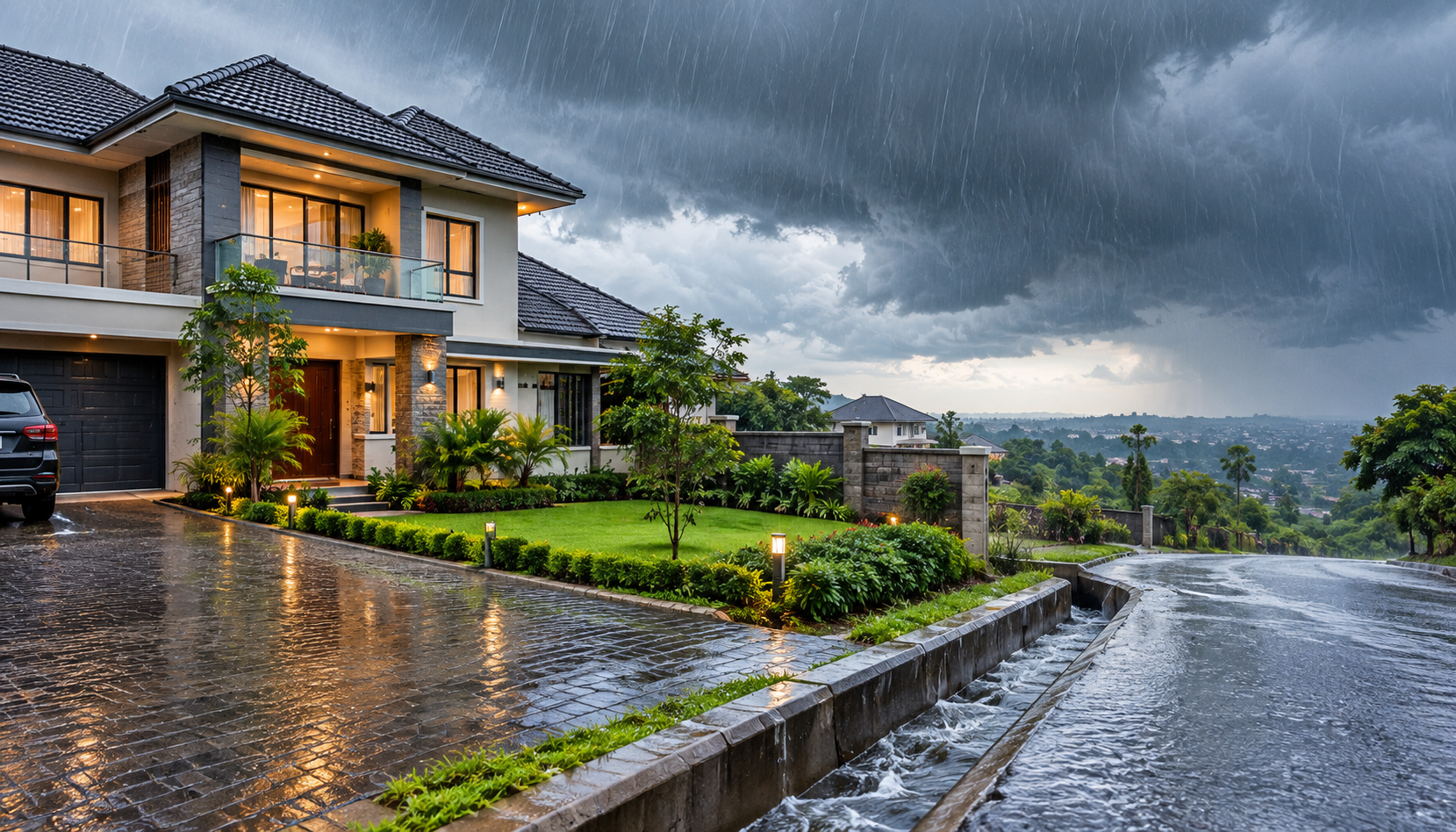
Heavy rains can reveal more about a property than a beautiful sunny-day viewing ever will. As Kenya prepares for the October to December 2026 short rains season, homeowners, tenants, landlords, developers and property buyers need to pay closer attention to flooding, drainage, construction quality and location.
The Kenya Meteorological Department has forecast above-average rainfall across many parts of Kenya during the October-November-December 2026 short rains season. The forecast includes Nairobi, Kiambu, Nakuru, Kajiado, Machakos, Narok, Murang'a, Nyeri, Meru and many other counties.
The official outlook also warns that heavy rainfall events are likely in several parts of the country. The forecast identifies a strong El Niño phenomenon as one of the climate factors capable of enhancing rainfall during the season.
For the real estate sector, this is more than a weather story.
Heavy rainfall can affect property values, accessibility, rental decisions, construction, warehouses, homes, apartments and land investments.
It can also reveal something that many buyers fail to discover during the dry season:
The rain exposes what the property viewing may hide.
This guide explains how El Niño and heavy rains can affect real estate in Kenya and what homeowners, tenants, landlords, developers and property buyers should do before and during the rainy season.
How El Niño and Heavy Rainfall Affect Real Estate in Kenya
Real estate is directly connected to the environment around it.
A house may have beautiful finishes, modern architecture and an attractive price. However, heavy rainfall can expose weaknesses that are not visible during normal weather conditions.
These include:
- Poor drainage systems
- Flooding within compounds
- Leaking roofs
- Water entering basements
- Poor road access
- Weak retaining walls
- Waterlogged land
- Blocked sewer systems
- Structural cracks
- Poor stormwater management
- Buildings located too close to watercourses
Recent flooding in Nairobi has also increased attention on drainage, elevation and climate resilience when buyers evaluate property. Property buyers are increasingly considering whether a home remains safe and accessible during heavy rainfall, rather than focusing only on location and appearance.
For buyers and investors, flood risk is becoming part of property due diligence.
Why the Rainy Season May Be the Best Time to Inspect Property
Most people prefer viewing property on a sunny day.
The roads are dry. The compound looks clean. The garden is attractive. Access is easy.
But this can hide important problems.
The rainy season allows a buyer to observe how a property actually performs under difficult weather conditions.
During heavy rain, you can discover:
1. Whether the Compound Floods
Does water collect around the house?
Does the compound drain properly?
Does water flow toward the building instead of away from it?
These questions are difficult to answer during the dry season.
2. Whether the Roof Leaks
Heavy rainfall can expose:
- Leaking roofs
- Poor waterproofing
- Faulty gutters
- Blocked drainage systems
- Water entering through windows
A property that looks perfect during a dry inspection may reveal serious maintenance problems during a storm.
3. Whether the Access Roads Are Reliable
A property may be advertised as being "close to the main road."
But can you reach it during heavy rainfall?
Buyers should check:
- Road condition
- Drainage along access roads
- Mud and erosion
- Flooding points
- Bridges and crossings
- Alternative access routes
This is especially important when buying land or houses in developing areas.
4. Whether the Area Has Proper Drainage
Rainwater should have somewhere to go.
Poorly planned estates often experience flooding because drainage infrastructure cannot handle the volume of stormwater.
The Kenya Meteorological Department has specifically identified flash floods, riverine flooding, damage to infrastructure and disruption of economic activities as potential impacts of the OND 2026 rains. It recommends clearing storm drains and drainage channels and strengthening flood preparedness.
What Property Buyers Should Check Before Buying a House During the Rainy Season
Buying property is one of the biggest financial decisions most people make.
Before purchasing a house, apartment or land, consider the following climate and flood risk checks.
1. Check the Property's Flood History
Ask directly:
- Has this compound flooded before?
- Has water entered the house?
- Have roads become impassable?
- Have residents experienced evacuation?
- What happened during previous heavy rains?
Do not rely only on the seller's answer.
Speak with:
- Neighbours
- Security guards
- Estate managers
- Local residents
- Previous tenants where possible
Past flooding does not automatically make a property unsuitable.
However, you need to understand what happened and whether the underlying problem was fixed.
2. Inspect the Drainage System
Look around the property.
Ask yourself:
- Are there visible drainage channels?
- Are they maintained?
- Are they blocked?
- Where does stormwater flow?
- Does the compound slope toward or away from the house?
- Is there standing water after rainfall?
Poor drainage is one of the biggest warning signs when evaluating property.
Experts have highlighted blocked drainage, roads or parking areas that slope toward homes and developments located near rivers or riparian corridors as important flood-risk indicators.
3. Understand the Land Elevation
A property located on higher ground is not automatically flood-proof.
Likewise, a property in a generally safe neighbourhood may have a low-lying compound.
Look at the relationship between:
- The house
- The surrounding road
- Nearby properties
- Drainage channels
- Natural water flow
If the surrounding land directs water toward the property, there may be a problem during heavy rainfall.
4. Check Proximity to Rivers and Waterways
Properties near rivers can offer beautiful views.
However, buyers should carry out additional due diligence.
Check:
- Distance from the river
- Riparian boundaries
- Historical flooding
- River overflow risk
- Drainage patterns
- Legal development requirements
Do not assume that a title deed alone answers every environmental or planning question.
A professional surveyor and other qualified professionals may be necessary when evaluating land near a watercourse.
5. Look for Signs of Previous Water Damage
During a property viewing, look for:
- Water marks on walls
- Damp patches
- Mold
- Peeling paint
- Cracks
- Rusted metal
- Damaged ceilings
- Erosion around foundations
These signs do not always mean the property has serious problems.
But they should lead to further questions.
What Homeowners Should Do Before Heavy Rains
Homeowners should not wait until the compound is flooded before taking action.
Preparing before the rainy season can reduce property damage and maintenance costs.
Clear Gutters and Downpipes
Blocked gutters can cause water to overflow into:
- Roof spaces
- Walls
- Ceilings
- Foundations
Regular cleaning is important.
Inspect the Roof
Check for:
- Loose roofing sheets
- Broken tiles
- Damaged waterproofing
- Loose flashing
- Blocked roof drainage
Repairing a small problem before heavy rains can prevent expensive damage later.
Clear Drainage Channels
Remove:
- Plastic waste
- Soil
- Leaves
- Construction debris
Water cannot flow through a blocked drainage system.
The Kenya Meteorological Department specifically recommends regular clearing of storm drains and drainage channels as part of flood preparedness for the OND 2026 season.
Protect Electrical Installations
Where flooding is possible:
- Keep electrical systems protected
- Avoid placing important equipment directly on the floor
- Inspect exposed wiring
- Know where the main power supply can be safely switched off
Always use qualified professionals for electrical work.
Protect Important Documents
Store documents safely and, where possible, maintain digital copies of:
- Title documents
- Lease agreements
- Insurance documents
- Property valuation reports
- Building approvals
- Important identification records
What Landlords Should Do Before the Rainy Season
Landlords have a responsibility to maintain safe and habitable properties.
Heavy rains can quickly turn minor maintenance issues into serious tenant complaints.
Before the rainy season, landlords should inspect:
- Roofs
- Gutters
- Drainage
- Sewer systems
- Perimeter walls
- Water pumps
- Boreholes
- Common areas
- Basement spaces
A landlord who addresses drainage and maintenance early can reduce emergency repair costs later.
What Property Developers Should Learn From Heavy Rains
The real estate market is changing.
Buyers are becoming more aware of flooding, drainage and environmental risk.
Developers can no longer focus only on:
- Beautiful finishes
- Modern kitchens
- Rooftop amenities
- Swimming pools
- Marketing brochures
Infrastructure matters.
A well-designed apartment can still become undesirable if the access road floods every time it rains.
A luxury house can lose value if the compound has poor drainage.
Recent flooding has exposed weaknesses in drainage infrastructure and structural planning, with experts emphasizing that climate resilience must be integrated into both buildings and surrounding infrastructure.
Developers Should Prioritize:
- Proper stormwater management
- Site elevation analysis
- Adequate drainage capacity
- Permeable outdoor surfaces where appropriate
- Rainwater harvesting
- Proper grading of land
- Protection of natural drainage paths
- Strong retaining structures
- Compliance with environmental requirements
The future of real estate in Kenya will increasingly involve climate-resilient development.
How Heavy Rains Affect Apartments
Apartment buyers and tenants sometimes assume flooding is only a problem for houses.
That is not always true.
Apartments can experience:
- Basement flooding
- Parking area flooding
- Water entering ground-floor units
- Lift disruptions
- Sewer backup
- Roof leaks
- Water damage in common areas
- Inaccessible roads
Before buying an apartment, ask:
- Has the basement ever flooded?
- Does the building have adequate stormwater drainage?
- Where does rainwater flow?
- Has the management company handled flooding before?
- Is there insurance for common property?
Flood risk should be considered alongside other factors such as location, amenities and service charges.
Warehouses and Godowns During Heavy Rainfall
This is particularly important for businesses renting warehouses and godowns.
A warehouse may be suitable for storage during normal conditions but become risky during heavy rainfall.
Businesses Should Check:
- Roof condition
- Loading bay drainage
- Warehouse floor level
- Surrounding drainage
- Access roads
- Flood history
- Water entry points
- Condition of gutters
- Emergency access
Flooding inside a warehouse can result in:
- Damaged stock
- Interrupted operations
- Delayed deliveries
- Insurance claims
- Lost revenue
Before renting a warehouse, visit the location and inspect the surrounding environment.
A cheaper warehouse with poor drainage can become more expensive than a better-designed facility once inventory damage and business disruption are considered.
The official OND 2026 forecast also warns that floods and infrastructure damage may disrupt movement of essential goods and services.
Does El Niño Affect Property Prices in Kenya?
The relationship between weather and property prices is complex.
Heavy rains do not automatically cause property prices to fall.
However, repeated flooding can influence buyer behaviour.
Buyers may become less interested in properties that experience:
- Frequent flooding
- Poor accessibility
- Water damage
- Drainage problems
- High maintenance costs
At the same time, properties with:
- Good drainage
- Reliable access roads
- Higher elevation
- Proper infrastructure
- Climate-resilient construction
may become more attractive.
Recent reporting from Kenya's real estate sector suggests that flood risk is increasingly influencing how buyers, investors and lenders evaluate property.
The key lesson is simple:
Location is no longer just about convenience. It is increasingly about resilience.
Should You Buy Property During the Rainy Season?
Yes.
In fact, the rainy season can provide valuable information that you may not get during the dry season.
Buying during the rainy season allows you to assess:
- Accessibility
- Drainage
- Flooding
- Road conditions
- Soil behaviour
- Water flow
- Roof quality
This does not mean every buyer should wait for heavy rain.
It means weather conditions can be used as part of property due diligence.
The best buyers do not only inspect a property when everything looks perfect.
They investigate how it performs when conditions are difficult.
Buying Land During the Rainy Season: What to Check
The rainy season can be particularly useful when buying land.
Visit the property and observe:
Water Movement
Where does water come from?
Where does it go?
Does water collect on the land?
Soil Condition
Heavy rain can reveal whether the soil becomes:
- Waterlogged
- Muddy
- Unstable
- Eroded
Access Roads
Can vehicles access the property?
Are there sections that become impassable?
Nearby Rivers and Seasonal Waterways
Some water paths are not obvious during dry weather.
Rain can reveal natural drainage routes that may affect future development.
Red Flags to Watch for When Viewing Property During Heavy Rains
Be cautious if you observe:
- Water entering buildings
- Flooded compounds
- Standing water for long periods
- Blocked drainage
- Roads turning into streams
- Strong sewage smells
- Erosion around foundations
- Cracks in retaining walls
- Water flowing toward buildings
- Neighbouring properties sitting significantly higher
- Buildings located close to active waterways
These signs do not automatically mean you should reject the property.
But they should trigger professional inspection and further investigation.
A Rainy Season Property Inspection Checklist
Before buying or renting a property, use this checklist.
Location and Access
- Is the property accessible during heavy rain?
- Are the roads properly drained?
- Is there an alternative access route?
Drainage
- Are drainage channels visible?
- Are they maintained?
- Does water flow away from the property?
Building Condition
- Does the roof leak?
- Are there signs of dampness?
- Are there water marks on walls?
Land and Environment
- Is the property near a river?
- Is the land low-lying?
- Are there signs of erosion?
Infrastructure
- Does the sewer system work properly?
- Is the water supply protected?
- Are power systems secure?
History
- Has the property flooded before?
- Have previous tenants experienced water damage?
- What improvements have been made?
Preparing Your Property for the OND 2026 Rains
The October-November-December rainfall season is particularly important in many parts of Kenya.
The Kenya Meteorological Department expects above-average rainfall in a large number of counties and warns of potential heavy rainfall events, flash floods, riverine flooding, infrastructure damage and urban flooding.
Property owners should prepare early.
Recommended Actions
- Clean gutters and drainage channels.
- Inspect the roof.
- Repair visible leaks.
- Check perimeter walls and retaining structures.
- Clear stormwater pathways.
- Secure outdoor furniture and loose materials.
- Protect electrical installations.
- Move vulnerable items away from low-lying areas.
- Inspect warehouse roofs and loading areas.
- Keep emergency contacts available.
Climate Resilience Is Becoming Part of Real Estate Value
For years, buyers have focused on:
Location. Location. Location.
Today, another factor deserves attention:
Resilience. Resilience. Resilience.
A property's long-term value is increasingly connected to its ability to withstand environmental challenges.
Future buyers may ask:
- Does this area flood?
- How is the drainage?
- Is the property near a river?
- Has the building experienced water damage?
- Is the infrastructure reliable?
These questions will become increasingly important as Kenya's urban areas continue to grow.
Climate resilience is no longer just an environmental discussion.
It is becoming a real estate issue.
The Rain Exposes What a Property Viewing May Hide
A beautiful property can impress you in ten minutes.
But a serious property investment requires more than first impressions.
The rainy season can expose:
- Poor drainage
- Weak construction
- Bad access roads
- Flood risks
- Roof problems
- Environmental concerns
For buyers, tenants, investors and developers, heavy rains provide information.
And information helps people make better property decisions.
Final Thoughts: Should You Be Worried About El Niño and Property?
There is no need for panic.
But there is a need for preparation.
Kenya's OND 2026 seasonal forecast points to above-average rainfall across many counties, including major real estate markets such as Nairobi, Kiambu, Nakuru, Kajiado and Machakos. Heavy rainfall events and flooding risks are among the potential impacts identified by the Kenya Meteorological Department.
For homeowners, preparation can reduce damage.
For landlords, maintenance can protect property and tenants.
For developers, better infrastructure can protect long-term property value.
For buyers, the rainy season can provide one of the best opportunities to investigate a property's real condition.
Before buying your next home, apartment, land or commercial property, don't just ask:
"Is this property beautiful?"
Ask:
"What happens here when it rains?"
That question could save you from making an expensive mistake.
Find Climate-Conscious Property Guidance in Kenya
At Sadiamond Properties Ltd, we believe buying property should involve more than choosing a beautiful house or attractive location.
We encourage buyers and investors to consider practical factors including accessibility, drainage, infrastructure, location and the surrounding environment before making a property decision.
Whether you are looking for:
- Houses for sale
- Apartments for sale
- Land for sale
- Villas
- Warehouses
- Godowns
- Commercial property
our team can help you explore available options and arrange property viewings.
Contact Sadiamond Properties Ltd
Call/WhatsApp: 0703 677 451
Website: www.sadiamondproperties.com